
The Devil Went Down to Battle Ground. Sort Of.
A Satanic Temple member opened a city council meeting, the internet lost its entire mind, and almost nobody explained what actually happened. So pull up a chair. No pitchforks required.
Every so often a headline crosses the county line and stops my thumb mid-scroll. “Satanic Temple member delivers first invocation at Battle Ground council meeting” was one of those. My first reaction was the obvious one: huh? My second reaction, after actually reading the thing, was that this is less a horror movie and more a very literal lesson in reading the fine print before you vote on it.
Quick disclosure so nobody has to guess: I don't belong to any organized anything. Do I believe in the devil? I've met a few people who could cosplay him convincingly, but nobody with horns, a pitchfork, or one of those pointy little tails. I have no team in this fight. I just love a good small-town plot twist, and our neighbors to the east delivered one gift-wrapped.
What actually happened
Back on Aug. 3, after a meeting The Reflector described as contentious, the Battle Ground City Council voted 5-1 to open future meetings with public invocations. The resolution says the slot is open to every faith, or the lack of one. Prayers count. So do statements. So do moments of silence.
How do you get the slot? First come, first served, on a rotating basis. No vetting committee, no theology quiz. Mayor Eric Overholser told The Reflector there would be “literally no filter,” which, in hindsight, is the most accurate forecast anyone in Clark County made all year.
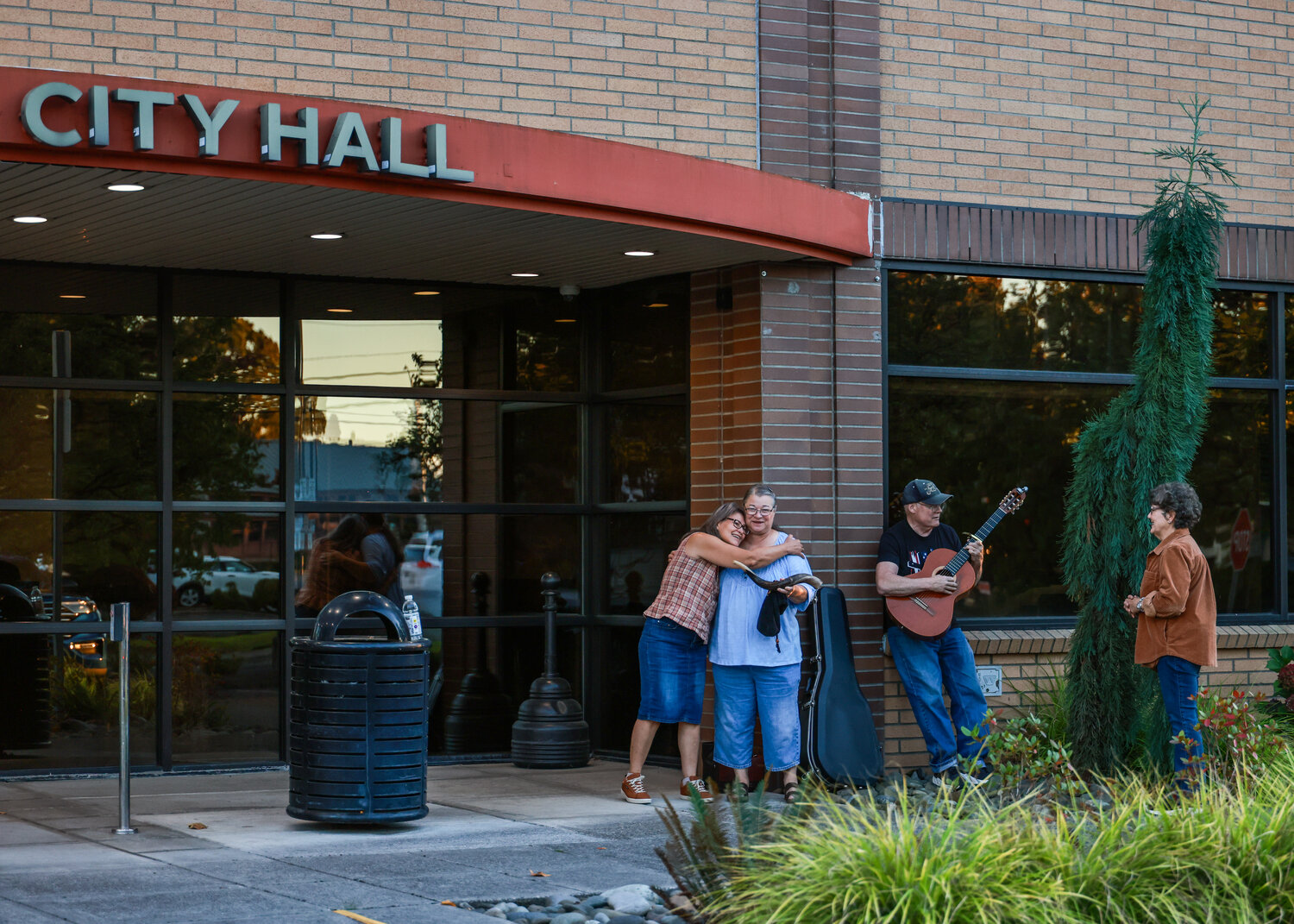
And who came first? On Monday, Oct. 5, Bast Sekhmet of the Satanic Temple of Washington stepped up to the podium. Before the meeting, residents gathered outside City Hall to hug and sing gospel. Inside, according to The Reflector's photos and reporting by Cade Barker, members of the council turned away while the invocation was read.
The invocation itself drew on the Satanic Temple's seven tenets, took some swings at traditional religion, held up Satan as a symbol of knowledge, and closed with the line that launched a thousand reposts: “Hail Satan.” Then the speaker thanked the city and said the group looks forward to coming back next year. Polite, honestly. More than I can say for some public comment periods.
The Short Version
Okay, but is the devil just misunderstood?
Here's the part most of the viral clips skipped. The Satanic Temple doesn't believe in Satan. Not as a literal guy, anyway. It's a nontheistic group, founded in 2013 and based in Salem, Massachusetts, that uses Satan as a literary symbol of questioning authority. No altar to a horned dude. No contracts signed in blood. Nobody's soul got traded for a golden fiddle.
Their seven tenets are, frankly, a little anticlimactic if you were expecting brimstone: act with compassion, pursue justice, respect bodily autonomy and other people's freedoms, base beliefs on science, own your mistakes and try to fix them. You could stitch most of that on a throw pillow at a Main Street boutique.
What they are famous for is showing up anywhere government opens a door to religion and saying, essentially, “Great, us too.” Whether you find that clever, obnoxious, or both depends a lot on where you sit on Sunday morning.
Why the city couldn't just say no
Short answer: the Constitution, and the rule the council wrote for itself.
In 2014, the U.S. Supreme Court ruled in Town of Greece v. Galloway that local governments can open meetings with prayer, even explicitly religious prayer. The catch is that once a government opens that door, it can't start picking which faiths get to walk through it. Invite everybody, and everybody means everybody.
Other cities have been here before. Phoenix dropped spoken invocations for a moment of silence in 2016 rather than host a Satanic Temple speaker. Boston, on the other hand, beat a Satanic Temple lawsuit in federal court, in part because its council invited speakers personally instead of running an open sign-up. Battle Ground went the open sign-up route on purpose. The door was open. Someone walked in.
(I am a newsletter lady, not a constitutional lawyer. But I can read a sign-up sheet.)
The bigger picture in Battle Ground
This didn't land in a vacuum. Battle Ground has been getting regional and national attention for a while now. Local reporter Dominick Bonny notes that some residents describe what's happening in city government as a Christian nationalist takeover. Others in town see the invocation policy as a welcome return of faith to public life, and the mayor has framed it as an open, transparent process anyone can join.
Those two camps are not going to agree on much. But they can probably agree on this: an open-to-everyone policy is going to produce speakers that some people really, really don't like. That's sort of the deal.
One more thread to watch: The Reflector has filed a public records request to track whether invocation speakers actually live in Battle Ground, or are coming in from elsewhere. If the answer matters to you, that's the story to follow.
Your questions, answered
Did Battle Ground pick a Satanist on purpose?
No. The policy is first come, first served. The Satanic Temple simply got there first.
Do Satanic Temple members actually worship the devil?
No. The group is nontheistic and treats Satan as a symbol, not a deity. If you were hoping for candles and chanting, I'm sorry to disappoint.
Could the council ban them?
Under the current policy, picking and choosing faiths would invite a lawsuit. A council could change course entirely, like Phoenix did with a moment of silence, but it can't open the door for some beliefs and shut it on others.
Will it happen again?
The speaker said they plan to come back next year. In between, the slot goes to whoever signs up next, which could be a pastor, a rabbi, an imam, a humanist, or someone who just wants 60 seconds of quiet.
Does this affect Ridgefield?
No. This is a Battle Ground policy for Battle Ground council meetings. We're just the nosy neighbors.
More from Meanwhile in Ridgefield
Church, chapel, coffee shop, or sleeping in, believe whatever you believe. But the real lesson here isn't about horns or halos. It's that city councils make decisions that get very real very fast, and most of us aren't in the room when they do. Go to a council meeting. Read the agenda. Know what your town is voting on. And if you've got thoughts on this one, tell me, nicely. The comment section is not hell, and I'd like to keep it that way.
