
Ridgefield Is Building Trails —
So Why Are We Cutting Recess?
The district is trimming elementary play time to its legal floor while the city mandates green space at every turn. It is worth asking whether those two things can truly coexist.
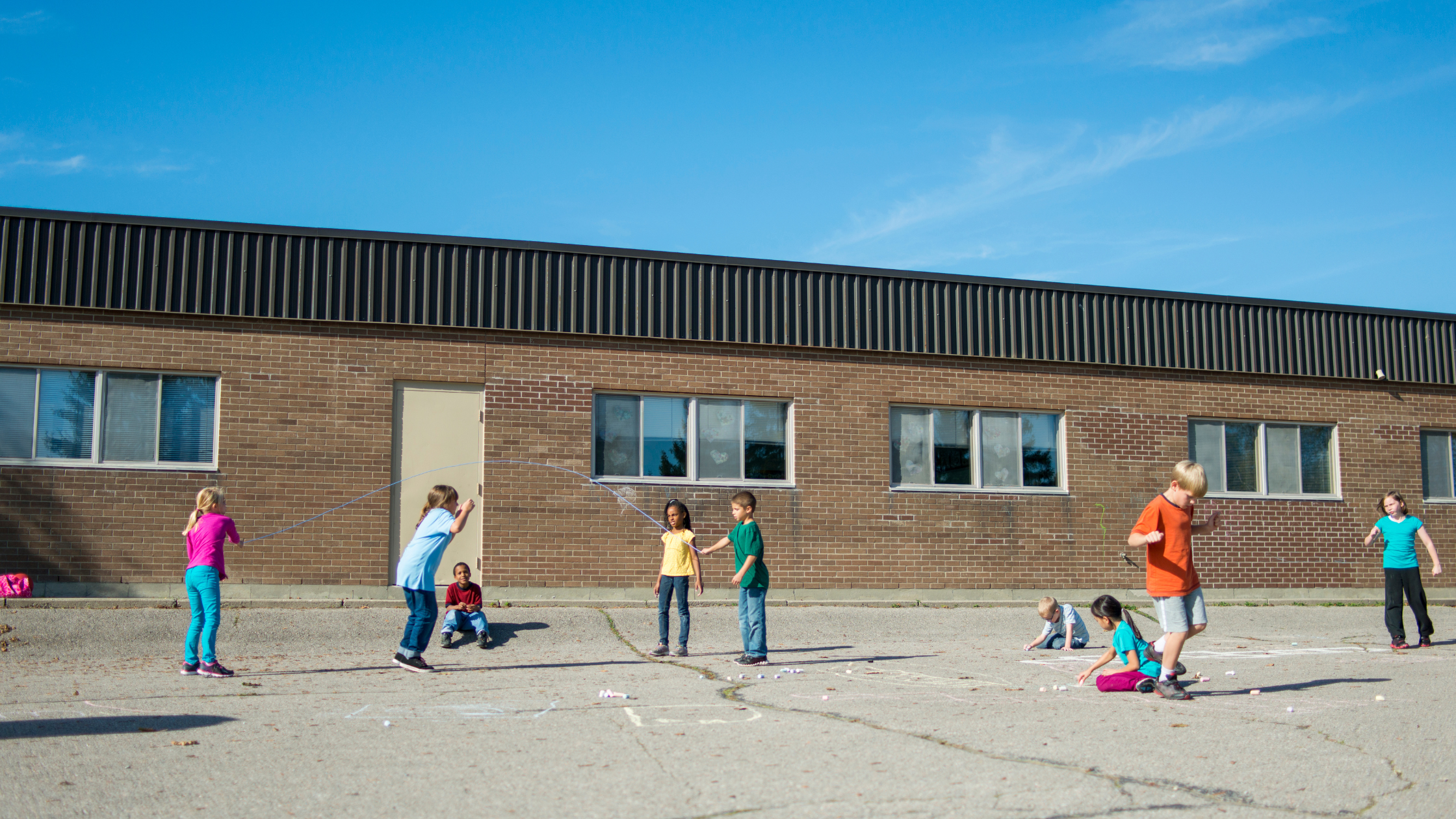
What Is Actually Changing
Starting in the 2026–27 school year, Ridgefield School District is adjusting the daily schedule at all three elementary schools — South Ridge, Union Ridge, and the incoming Sunset Ridge — in ways that have quietly stirred one of the louder public comment sessions this town has seen in a while.
The headline number is five minutes. Grades 1 through 4 will lose five minutes of daily recess, totaling 25 minutes less per week. The district frames this as gaining nearly an extra hour of core instruction in reading, writing, and math each week — and, compounded over an elementary career, roughly 200 additional hours in a classroom seat.
The schedule changes at a glance:
Grades 1–4: recess reduced by 5 minutes daily (to the Washington State minimum of 30 minutes).
Grade 5 (returning to elementary this year): recess actually increases by 5 minutes daily.
Specialists (art, music, PE, library, science, Foundations for Learning) move to a six-class rotating model, each at 45 minutes per week.
Teacher teams gain one 45-minute weekly block for professional collaboration.
The Reflector covered the May 12 school board meeting, where the room was packed. Parents, teachers, and residents showed up to voice their concerns — including South Ridge music teacher John Thomas, who read a letter from a concerned parent into the public record. The district heard them. The plan, as far as anyone can tell, is still moving forward.
The Legal Backdrop
Washington State made this concrete in the 2024–25 school year: RCW 28A.230.295 requires all K–5 students to receive at least 30 minutes of daily, supervised, student-directed recess. The law also specifies that recess cannot be withheld for disciplinary reasons or to complete academic work, and it cannot count toward PE requirements.
The district's new schedule is designed to comply with that law — and, from a purely bureaucratic standpoint, it does. Thirty minutes is the floor, and 30 minutes is what grades 1 through 4 will get.
That distinction matters. The law was passed because research and advocacy groups pushed back against a decade of districts slashing unstructured time in the name of test-score recovery. The floor exists because some schools were going lower. Choosing to sit exactly on it is a decision — not a neutral outcome.
The Specialists Question
Recess is one piece of it, but the louder concern at that May 12 meeting had to do with what happens to art, music, and PE under the new rotating model.
Previously, students saw their specialist teachers on a more predictable cadence. Under the new six-class rotation — which now includes science and Foundations for Learning alongside the traditional arts — parents have pointed out that when holidays, snow days, or professional development days fall on a particular rotation slot, some weeks a child may attend zero sessions of music or art. The "feast or famine" problem: subjects that benefit most from consistent, repeated practice become the ones most exposed to scheduling gaps.
The district says the changes were developed collaboratively with elementary principals, district leadership, and labor representatives. That may be true. But collaboration between administrators is not the same as community input, and the packed board room on May 12 made that gap visible.
The "Foundations for Learning" Paradox
One of the new specialist slots each week will be dedicated to a class called Foundations for Learning — a structured course covering leadership, collaboration, emotional regulation, and related skills.
Those are genuinely important things. Nobody argues otherwise.
But there is a fairly obvious irony in the design: the skills being taught in that class — conflict resolution, managing frustration, reading social cues, collaborating without adult direction — are precisely what developmental researchers say children acquire organically during unstructured recess. The "lab" for those skills is a playground where a disagreement over a kickball call has to get worked out without a teacher moderating the lesson plan.
Replacing some of that lab time with a lecture on the same subject is not obviously an upgrade.
The Contradiction I Keep Coming Back To
I should say upfront: my last kid is graduating high school in June, so this does not touch my household directly. I came across this on Facebook, started reading, and found myself going down a research rabbit hole for longer than I expected — because the more I read, the more a single irony kept sharpening.
I will also say where I am coming from. My mother was a kindergarten teacher her entire career. My father coached college men's lacrosse. I grew up playing sports and graduated from Rutgers University. Movement and learning have not been abstract concepts in my life — they have been the water I swam in. And in the years since, I have spent a fair amount of time reading neuroscience — not casually, but because I find it genuinely fascinating how much the body and the brain are one system, not two.
When I take a walk to solve a problem, I am not taking a break from thinking. I am thinking better. The research on this is not fringe — it is mainstream, peer-reviewed, and in some cases decades old.
Requires any business purchasing land to preserve 25% of that land as green space or park. New trails are going up. The policy is explicit: open space, access to nature, and room to move are non-negotiable features of what this town is.
Is reducing unstructured outdoor time for elementary children to the legal minimum. The rationale is efficiency — more seat time, more instructional minutes, better test outcomes over a career.
The city's green space requirement is not a small thing. Twenty-five percent is higher than most comparable municipalities. Some developers push back on it as expensive and restrictive. The city holds firm anyway, because the people who lead it have decided that the character of this place — its walkability, its breathing room, its connection to the outdoors — is worth protecting even when it costs something.
That is a values statement. A good one, I think.
And then the school district — which operates in the same town, serving the same families, on the same land those trails connect to — is trimming the part of a child's school day that most closely resembles what the city is building outside.
The Science Is Not Particularly Ambiguous
Here is what I found when I went looking for actual sourced research — not opinion, not advocacy, but peer-reviewed studies and major medical organization findings. The case for protecting movement time is not thin. It is stacked.
of randomized controlled trials in children aged 5–12 showed significant increases in Brain-Derived Neurotrophic Factor (BDNF) following structured physical activity. BDNF supports the formation of new neural connections — the literal mechanism of learning and memory retention. Blocking BDNF in the hippocampus eliminates exercise-induced improvements in spatial learning.
Read the studyThe AAP's landmark policy statement — just updated in 2026 — concludes that recess is "a necessary break in the day for optimizing a child's social, emotional, physical, and cognitive development." It explicitly states that cutting recess to boost academic time is likely counterproductive, and that recess cannot be substituted by PE or structured activity.
Read the statementResearchers found that children who walked for just 20 minutes showed measurably improved brain activity and higher scores on academic achievement tests immediately afterward — compared to children who sat quietly. The mechanism: aerobic movement increases blood flow and oxygen to the brain, directly enhancing cognitive processing.
Read the summaryChildren in regular aerobic exercise programs showed 15 to 20 percent improvements in working memory capacity over sedentary control groups. A separate meta-analysis found that aerobic activity also significantly improves cognitive flexibility — the ability to switch between tasks — which is precisely the skill required to move between math, reading, and writing in a school day.
Read the meta-analysisNone of these studies are obscure. The AAP's recess policy statement was just updated — in 2026, the same year this schedule change takes effect. The working memory findings have been replicated across multiple research contexts. The BDNF research explains the biological mechanism: movement does not just correlate with better learning, it triggers the chemical process by which the brain forms new connections.
The district's "200 extra hours" argument sounds compelling on a spreadsheet. The harder question is whether those hours will be spent by children whose brains are primed and ready — or by children who have been sitting in chairs long enough that the cognitive returns are diminishing.
— Adapted from AAP "Crucial Role of Recess in School"
What This Is Probably Really About
Washington State has been cutting the share of the budget going to K–12 education for several years running. Special education funding has been called "severely underfunded" by district leadership. Inflation has hit operating costs. When a district is under financial pressure and also trying to satisfy state mandates around literacy and math outcomes, one of the easiest levers to pull is time reallocation — moving minutes from less-measurable activities toward things that show up on accountability reports.
I am not saying the district is being dishonest about the educational rationale. I think they genuinely believe the changes will help students. I also think it is worth being clear-eyed that "instructional minutes" are easy to count and defend to a state auditor, and that the cognitive and social benefits of unstructured play are harder to put in a row on a budget justification document.
The community showed up in that boardroom on May 12. The question is what happens next.
