
Ridgefield vs. Battle Ground, WA: The Honest 2026 Comparison
Which is better to live in? The real answer depends on your commute, your school priorities, and your budget — here's the practical rundown, not a booster piece.
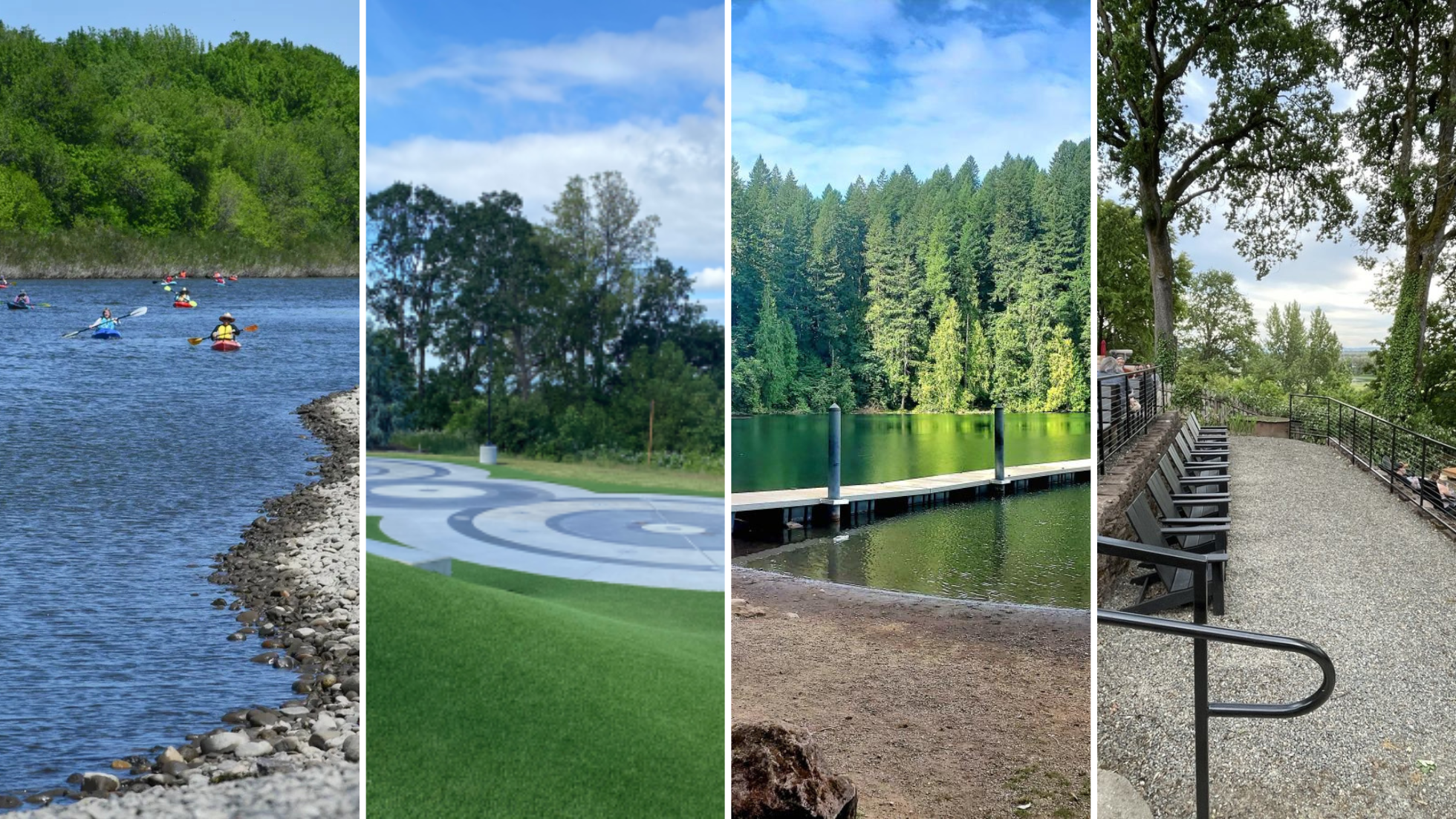
Ridgefield vs. Battle Ground is the question Clark County newcomers search every single week, and the honest answer depends on three things: your commute, your school priorities, and your budget. Both towns sit in the same sweet spot — small-town pace with Portland within reach — but they are not interchangeable, and picking based on vibes alone tends to bite people a year in.
This isn't a booster piece for either side. Below are the facts that actually decide moves: home prices, schools, commute times, day-to-day life, and where each town is headed. Read it against your own priorities, and by the end you'll know which one lines up with your budget, your schedule, and the way you actually want to live.
Quick Comparison
What Your Housing Budget Actually Buys
Ridgefield: newer, pricier, in-migration driven
Ridgefield's 2026 median sale price sits at $645,000, per Zillow and Redfin market summaries. That premium reflects newer construction, strong in-migration from the Portland metro, and limited resale inventory. Most homes in the newer developments run 3–4 bedrooms, roughly 1,900–2,400 square feet, on modest lots in master-planned neighborhoods with sidewalks and community parks. Average rent runs about $2,163 a month. Ridgefield skews newer and pricier, full stop.
Battle Ground: lower buy-in, older housing stock
Battle Ground generally comes in lower. Current 2026 medians range from roughly $535,000 (Redfin) to $563,000 (Zillow), and you'll find plenty of 1990s and 2000s homes with larger yards for the money. New construction exists, but the mix leans toward established neighborhoods and acreage on the edges. You trade some modernity for value and lot size — a trade a lot of buyers are happy to make.
Property taxes: the line item most buyers underestimate
Ridgefield's city levy rate is actually lower per $1,000 than Battle Ground's — roughly $0.58 versus $0.95 — but Ridgefield's higher home values push the actual bill higher anyway. A typical Ridgefield tax bill runs around $4,605 a year on a median assessed value near $571,900. For a ballpark estimate on either town, multiply the sale price by roughly 0.82–0.89 percent for Ridgefield or up to 0.95 percent for Battle Ground. The rate on paper isn't your bill — assessed value and stacked levies are what actually land in your mailbox.
Schools: Which District Sets Kids Up Better?
Ridgefield School District ranks #2 in Clark County on Niche's 2026 district rankings and earns higher parent-review averages than Battle Ground Public Schools. It's a smaller, higher-performing district with facilities that have seen significant capital investment over the past decade — a cohesive K–12 path, engaged staff, and notably broad extracurricular offerings for a district its size.
Battle Ground serves a much larger and more geographically spread student body. The upside is breadth: more buildings, more electives, specialized options like CAM Academy and alternative learning programs. The tradeoff is variability between individual schools — families commonly target specific attendance areas like Tukes Valley and Pleasant Valley, so the research falls on you rather than the district-wide reputation doing the work.
If district-wide consistency and newer facilities matter most, Ridgefield's compact system makes the stronger case. If program variety matters more, Battle Ground offers more lanes. Either way: match your kid's needs to a specific campus, then visit and ask about counselor ratios, before/after care, intervention access, advanced coursework, and bus times for your actual address. The Washington State Report Card (OSPI) has additional metrics for both districts if you want to go deeper than reputation.
The Commute Reality
Ridgefield sits directly on I-5. Vancouver is about 20 minutes away in normal traffic, and downtown Portland runs roughly 35–45 minutes, with peak hours pushing toward the high end. Living near the on-ramp saves real minutes daily and cuts down the number of turns between you and the freeway. Hybrid schedules have softened this advantage somewhat, but for anyone commuting to Portland five days a week, Ridgefield's direct freeway access is tangible every single week.
Battle Ground sits east of I-5 off SR-503. The drive to Vancouver runs roughly 25–30 minutes, and Portland typically takes 45–60 minutes at peak. In exchange, you get a quieter setting, fewer freeway-adjacent neighborhoods, and more breathing room. The commute cost is real, but for local workers or remote setups it's not a dealbreaker.
The honest framework: daily Portland commuters will feel Ridgefield's advantage five days a week. Vancouver-based, hybrid, or remote workers shift the math toward Battle Ground's lower price point. Be honest with yourself about how often you actually head south, at what time, and for how long — commute patterns decide more than maps do. Drive your actual route at your actual time before you commit to either one.
Everyday Life: Dining, Parks & What's Actually Here
Ridgefield's commercial lineup is expanding quickly and daily — downtown already has coffee shops, bakeries, wine bars, taprooms, and family-friendly spots, with openings like In-N-Out and confirmed Chick-fil-A and also ilani restaurants adding to the pipeline. More commercial development is planned around the Junction area. Ridgefield is still filling in its commercial scene, in other words, but it's filling in fast.
Battle Ground has a settled commercial core — independent restaurants (go to Al and Ernies please), practical retail, a downtown that feels lived in. Its genuine strength is outdoor access: Battle Ground Lake State Park, Lewisville Regional Park, and the Lewis River corridor are all within easy reach for hiking, swimming, and long afternoons outside. Battle Ground's parks network is older and broader than Ridgefield's newer, more manicured city parks — it simply had a longer head start.
A typical Saturday in Ridgefield: coffee on Pioneer Street, a game at the Outdoor Recreation Complex, lunch at a local burger/pizza/mexican spot, then a walk at the Ridgefield National Wildlife Refuge — with ilani ten minutes away if you want a bigger night. A typical Saturday in Battle Ground: pancakes downtown, a few hours at Lewisville, a swim or paddle at Battle Ground Lake, then dinner at a local pub.
Growth Trajectory: Momentum vs. Stability
Ridgefield is still in active build mode. Housing starts, commercial development at the Junction, and a steady stream of permits have expanded the town's footprint dramatically compared to five years ago. That creates real opportunity for buyers who want to grow with a community and benefit early from new amenities — with the predictable tradeoffs of construction traffic, school capacity pressure, and infrastructure that occasionally plays catch-up.
Battle Ground grows at a calmer pace. Neighborhoods are more established, and large master-planned developments are fewer. The upside is predictability — fewer growing pains, a clearer sense of what you're buying into. Some buyers genuinely prefer knowing what a town already is over betting on what it's becoming.
Safety & Livability
Both towns are generally safe by small-city Clark County standards. Local police dashboard data places Ridgefield's violent crime well under 1 per 1,000 residents and property crime in the low single digits per 1,000 — notably low for a growing community. Battle Ground's crime figures run higher than Ridgefield's on both property and violent crime, though still far below urban rates. Either way, the smart move is to pull recent calls-for-service data for the specific block you're considering rather than trusting a citywide average.
Neighborhoods to Tour
In Ridgefield: start with historic Downtown Ridgefield for charm, then newer developments including Seven Wells Estates, Kennedy Farm, Taverner Ridge, Pioneer Canyon, and Royal Terrace. Older downtown homes run mid $400s to low $600s; newer 3–4 bedroom builds fall in the low-to-high $600s; view or acreage properties start in the high $700s and climb above $900K.
In Battle Ground: check out Battle Ground Village, the Tukes Valley area, Old Town, and Meadow Glade for acreage options. Three-bedroom resales commonly land in the mid $400s to mid $500s; newer builds run low-to-mid $600s; acreage properties often start in the high $600s and climb into the $800s and above. Treat all of these as orientation ranges — verify current comps through an active MLS search before you fall in love with a number.
Before You Decide: A Visit Checklist
- Drive your actual commute at your actual time, both directions — not what a map app estimates on a quiet Sunday.
- Walk the neighborhood at dusk and on a Saturday morning. Listen and look.
- Map your 15-minute life: grocery, pharmacy, coffee, parks, urgent care.
- Visit target schools and ask about waitlists, intervention programs, and electives. Pull additional data from the Washington State Report Card (OSPI).
- Pull recent police calls for the specific block, and review any HOA or CC&R rules that apply.
Frequently Asked Questions
Ridgefield, without much debate. Direct I-5 access shaves real time off the daily drive compared to Battle Ground's route off SR-503, and that advantage compounds five days a week.
Ridgefield ranks #2 in Clark County on Niche's 2026 rankings and offers more district-wide consistency. Battle Ground is larger with more program variety, but quality varies more by individual school, so the right answer depends on which specific campus serves your address.
Yes, generally — 2026 medians run roughly $535,000 to $563,000 in Battle Ground versus $645,000 in Ridgefield. Ridgefield's newer construction and stronger in-migration are the main drivers of that gap.
Ridgefield, by a wide margin. It's in active build mode with new housing, commercial development at the Junction, and a steady stream of permits. Battle Ground grows at a calmer, more established pace.
More From Meanwhile in Ridgefield
- Moving to Ridgefield, WA: The Complete Guide — the full rundown on housing, commute, and cost of living
- Moving to Ridgefield With Kids: A Complete Family Guide — schools, neighborhoods, and parks for families
- Things To Do Near Ridgefield — the full activity and venue guide
- All Guides — everything we've written for people moving to or living in the area
- Ridgefield News — development, local government, and community updates
Neither town is objectively better — they're built for different priorities, and the honest move is picking the one that matches yours rather than the one with better marketing. If you're leaning Ridgefield, the rest of this site is built to help you get settled. Come find us at First Saturday once you're here.
