
So What Exactly Is the Ivy Pull — and Why Does It Keep Happening?
If you've seen the signs around Abrams Park or noticed your neighbors showing up in muddy boots on a Saturday morning, here's the full story: what English ivy actually is, why it's a serious problem for Ridgefield's trees and wildlife, and why pulling it out by hand is genuinely the best solution anyone has found.
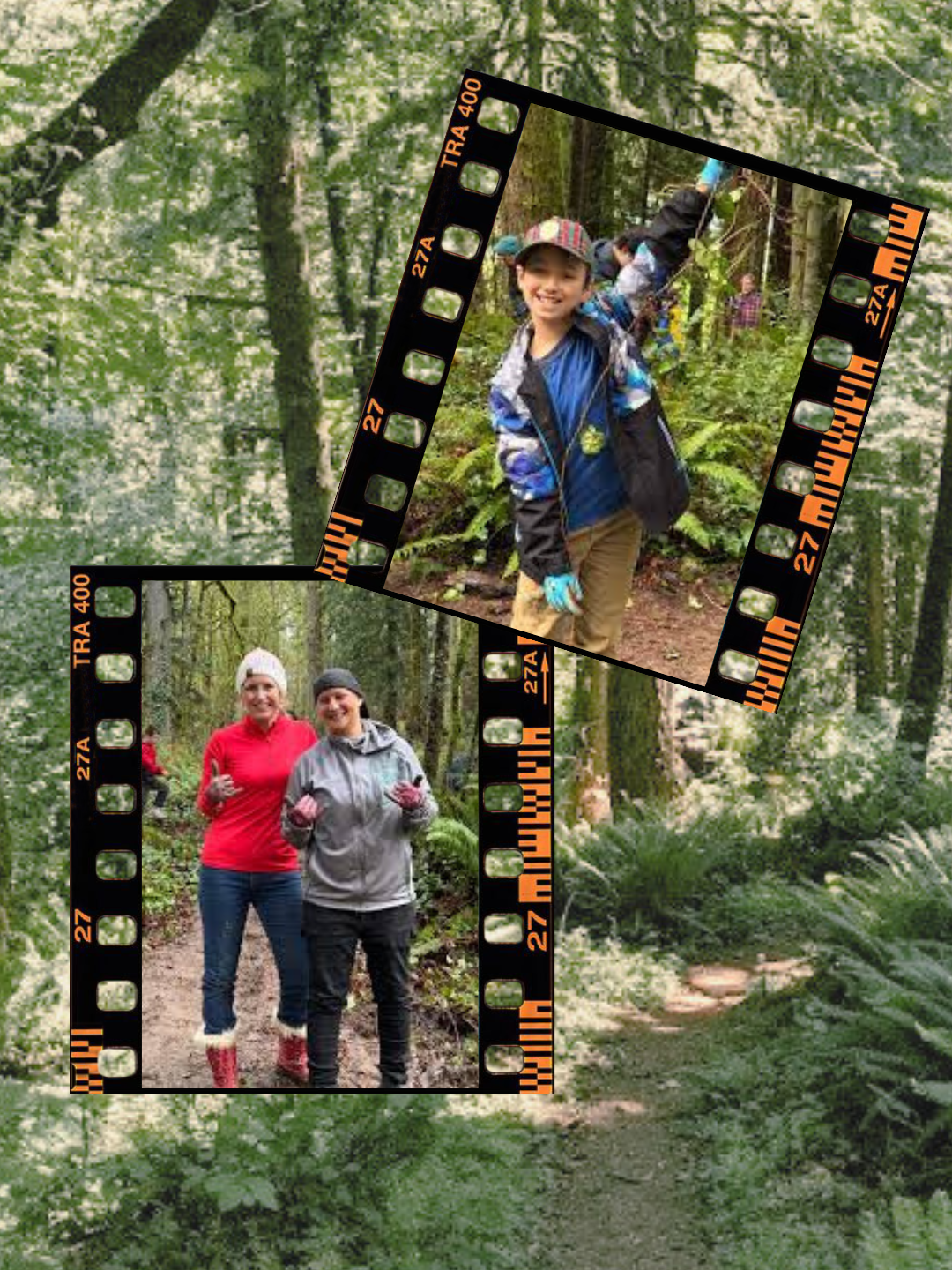
The Ridgefield Garden Club and City volunteers at work in Abrams Park. It is exactly as satisfying as it looks.
Every few months, a small crew of Ridgefield residents shows up to Abrams Park, pulls on gloves, and spends a few hours yanking ivy off trees and out of the ground. If you've driven past and wondered what they're doing — or whether it's actually working — this post is for you.
The short answer: English ivy is one of the most damaging invasive plants in the Pacific Northwest, it spreads faster than you'd expect, and without regular removal it will quietly take over the park. The longer answer is worth knowing.
Wait — What's Wrong with Ivy?
English ivy (Hedera helix) was brought to North America as an ornamental ground cover. It looks tidy, stays green year-round, and grows without much fuss. That's exactly the problem. In its native range in Europe, it's kept in check by insects, diseases, and animals that evolved alongside it. Here in the Pacific Northwest, none of those natural brakes exist.
The result is a plant that just keeps going. It spreads across the ground in dense mats, blocking sunlight and crowding out native plants before they can establish. But the ground cover problem, as bad as it is, isn't even the worst part.
"When ivy climbs a tree, it isn't just sitting there looking picturesque — it's adding hundreds of pounds of weight, blocking sunlight to the canopy, holding moisture against the bark, and making the whole tree dramatically more likely to fall in a wind event."
A tree covered in ivy — what people sometimes call an "ivy tree" — is a tree in slow decline. The ivy doesn't strangle the tree the way a strangler fig does, but it competes aggressively for water and nutrients, weakens the structure over time, and turns the canopy into a sail. That's why ivy-covered trees come down more often in storms. It's also why arborists have a name for it: they call it "green death."
And then there's the wildlife angle. Dense ivy mats eliminate the layered structure of a forest floor — the ferns, native shrubs, wildflowers, and mosses that birds, insects, and small mammals depend on. According to the City of Ridgefield, ivy reduces wildlife habitat by at least 80% in areas where it takes over. In a community that sits right alongside the Ridgefield National Wildlife Refuge, that's not a small number.
Why Not Just Spray It?
This is the first question most people ask. The honest answer is that herbicide is an option in some situations, but it comes with real tradeoffs. Ivy is persistent — it requires multiple applications to kill established plants, and herbicide drift can damage the native species you're trying to protect in the first place. In a park setting with mixed vegetation, near water, and with kids and dogs around, the calculus tilts toward mechanical removal.
Hand-pulling is slower, obviously. But it's precise, it doesn't require chemical inputs, and it works. The technique matters: you cut a ring through the ivy vines at the base of any tree that has climbed ivy on it, then pull the ground mat away from around the tree base. The vines higher up on the trunk die on their own once they're cut off from the roots. You don't have to climb the tree.
The "Ivy Ring" Method
- Clear a ring around the base of the tree, pulling ivy away from the trunk for about 3–4 feet.
- Cut through the vines at the base — they don't need to come down from the trunk immediately.
- Vines above the cut will die naturally over the following weeks and fall away.
- Remove the ground mat outward from the cleared ring.
- Don't compost the pulled ivy — bag it. Vine fragments can re-root.
Is It Actually Working?
Yes — in the areas that get regular attention. That's the thing about invasive plant removal: it isn't a one-and-done project. Ivy seed spreads by birds eating the berries, which means new plants keep appearing from the edges. Ground mats that weren't fully cleared can regrow from root fragments left in the soil. So the events aren't a sign that previous efforts failed — they're the reason previous efforts are holding.
Think of it less like a renovation and more like maintenance. The first pull in a badly infested area is the hardest. Each subsequent event in that same area is easier, because you're managing regrowth rather than tackling an established mat. Abrams Park has been a consistent target for a reason: it's working, and the trees that have been freed from ivy for a few years are visibly healthier.
The Ivy Pull is a collaboration between the City of Ridgefield and the Ridgefield Garden Club, and it happens regularly enough that you'll see it on the community calendar a few times a year. The next one is May 16.
The May 16 Ivy Pull — What to Expect
It runs three hours and you can show up for as much or as little of that as you have. There's a short demonstration at 9 AM on how to pull correctly, and then everyone gets to work. Gloves and tools are provided, though they mostly just use hands — ivy pulls out more cleanly that way than you'd think.
What to Bring
- Clothes that can get dirty — you will get dirty
- Sturdy shoes or boots (the terrain is uneven)
- Your own water and snacks
- Gloves if you have them (some are provided)
- Kids 13 and under need an adult with them
Park anywhere in the Abrams Park lot and find the registration table. Questions? Contact the Ridgefield Garden Club: Heather at 360-281-8367 or Laura at 707-225-5594.
Why This Matters for Ridgefield Specifically
Ridgefield is in an unusual position. We're a small, growing city with a National Wildlife Refuge essentially in our backyard, a water trail running through 32 miles of river habitat, and a community that genuinely cares about what that natural environment looks like. That's not something most places have.
It also means the choices we make at the park level — whether we let ivy take over Abrams Park, whether we show up a few times a year to beat it back — connect directly to the broader health of a habitat that is actually worth protecting. The ivy pull isn't just civic busywork. It's one of the more tangible things a resident can do in three hours on a Saturday morning.
More from Meanwhile in Ridgefield
If you've been curious about the ivy pull every time you've seen it on the calendar, now you know. And if you've got a Saturday morning free on May 16, the park could use the help.
