
Fifteen People, Three Minutes Each, and a Survey That Closes Monday
The waterfront argument moved out of the Port's building and into council chambers Thursday night. Here is what was said, who said it, what the Port is saying back through The Reflector, and the deadline almost nobody in that room mentioned.
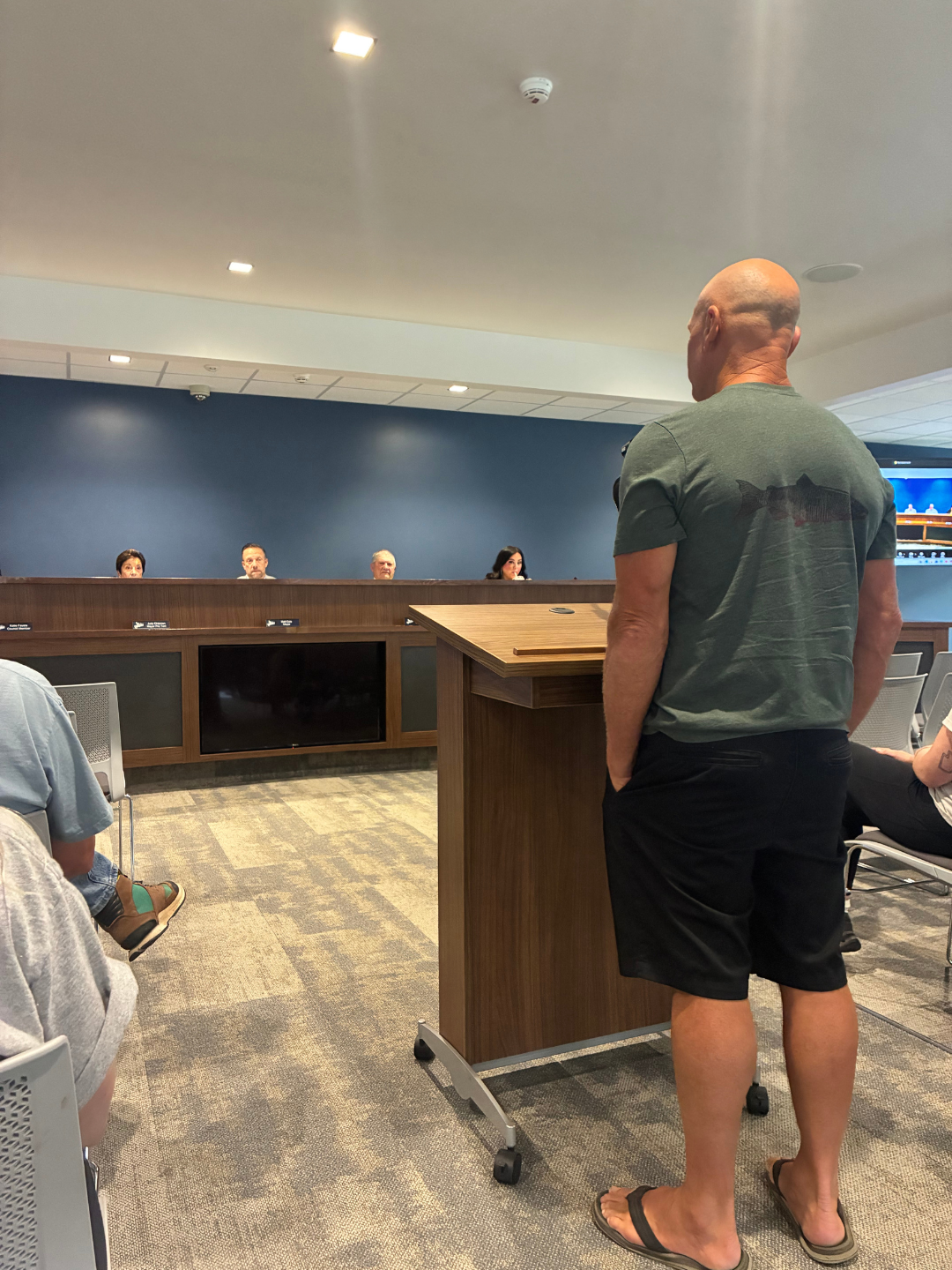
There is a version of a city council meeting that takes an hour. Flag salute, roll call, consent agenda, a few items of business, everybody home by eight, latest. Thursday night was not that. Public comment alone ran long enough that I left during the budget discussion, which I am telling you up front because I would rather you know the shape of what I saw than assume I saw all of it.
Roughly fifteen people took the microphone. Nearly every one of them was there to talk about the Port of Ridgefield, the waterfront, the survey, the meetings, the process. Nancy Bateman went first and set the tone, and the line behind her did not really break for a while.
Here is the thing that makes this worth a post rather than a paragraph in the newsletter: for three months, the waterfront argument has been aimed at the Port. The forum in June, the tabling at the farmers market, the survey, the commission meetings. Thursday it showed back up at city council - where it originally started. Whether that was a deliberate strategy or just people looking for a new microphone is a fair question, and I do not think it has one clean answer.
How public comment actually works
If you have never been, the format is worth understanding before you judge anybody's performance in it, including mine.
After the general session opens with the flag salute and roll call, the floor goes to public comment. Each person gets three minutes. Council members do not reply, do not respond, and do not engage. That is not rudeness and it is not a dodge, it is how the format is built at that stage of a meeting. You say your piece into a room that is required to sit there and receive it, a clerk records it, and you sit down.
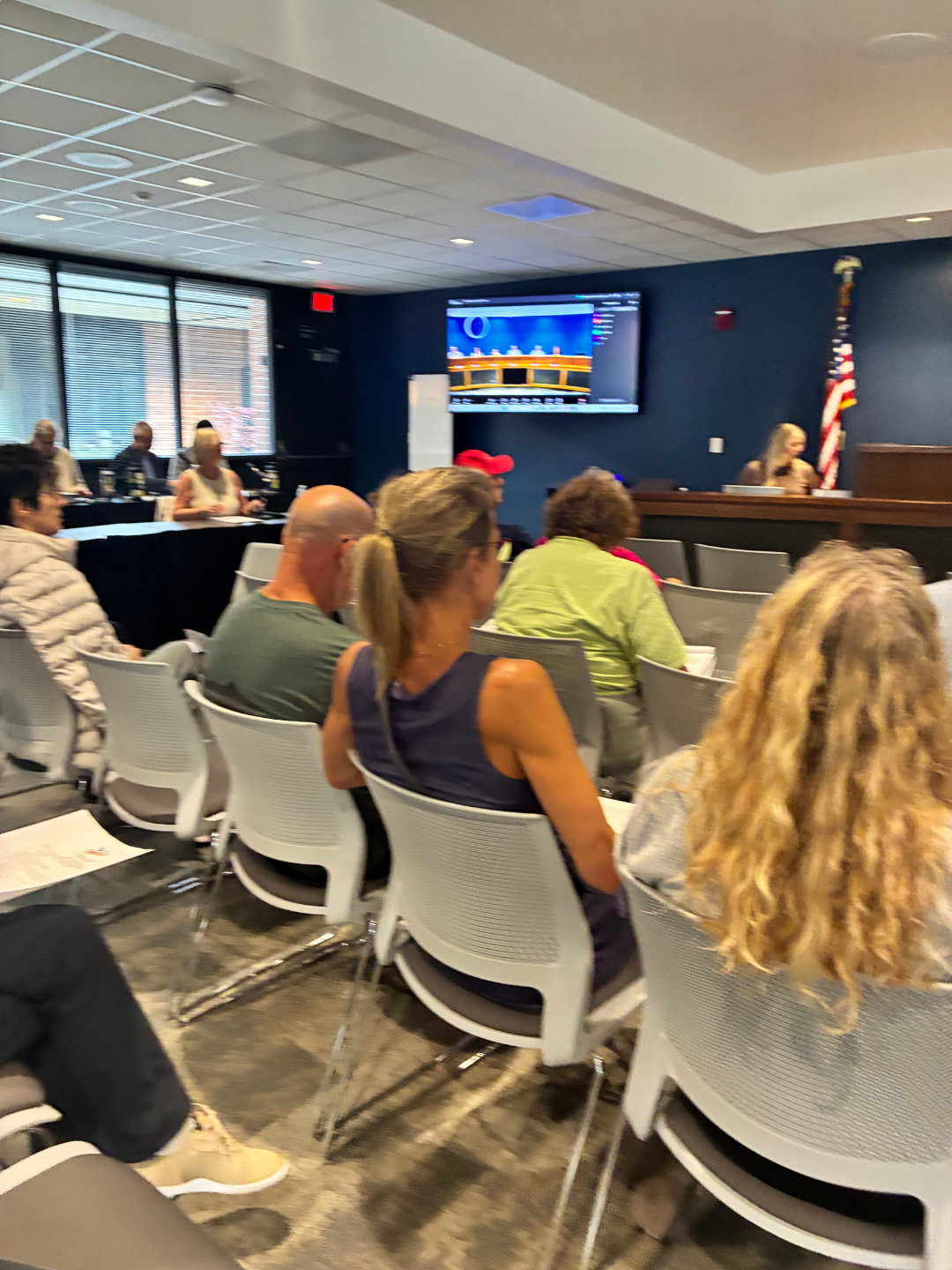
One commenter appeared by Zoom, which is the detail I most want people to walk away with. If you have opinions about any of this and cannot make it downtown on a weeknight, remote comment is a real option and it counts the same as standing at the podium.
The Meeting
Who spoke
Public comment at a public meeting is on the record, so these are names I can share. This is not everyone who spoke and it is not in strict order, it is what I caught before I left.
The concerns tracked closely with what has been said at every waterfront gathering since spring: the scale of the proposed buildings, the residential component, traffic and infrastructure, the Ridgefield National Wildlife Refuge, and a widespread feeling that the Port's engagement process is a formality rather than a genuine ask.
Running alongside all of it is the Preserve the Ridgefield Waterfront petition, started by Wendy McIntire in April. As of Friday morning it sits at 3,456 verified signatures, with 115 added in the past week. In a city this size, that is not a rounding error.
Meanwhile, the Port is talking to a different room
The same week all this played out at council, The Reflector ran a detailed sit-down with Port leadership that is worth your time. Summer Sorensen's piece is the clearest articulation I have seen of the Port's actual reasoning, and if you are going to argue with the Port it helps to know what you are arguing with.
Executive Director Ethan Perry keeps coming back to one phrase for what he wants out there: a "21st century working waterfront." Per the Reflector's reporting, returning the site to industry was never seriously considered, partly because it would mean closing off the park. The contamination left behind by Pacific Wood Treating was capped rather than fully removed, which leaves legal covenants dictating what can be built and where, and those restrictions still govern the site today.
On the housing question, the Port's argument rests on two things. First, market research the Port cites from the Urban Land Institute indicating that mixed-use waterfronts including residential perform better than those without, on the theory that people who live there keep the place busy outside of office hours and hotel check-ins. Second, the Growth Management Act: Ridgefield's 2025–2045 comprehensive plan requires the city to plan for more than 10,600 additional residents and roughly 5,800 new housing units over twenty years, and the Port points to its property as part of how the city meets that obligation.
Two numbers from that article that I had not seen before and think matter. The total residential buildout across the whole project is now stated as 250 to 350 units, with the Phase 1 count still undecided. And the boat launch, which almost everyone in town wants expanded, currently operates at a loss: roughly $120,000 a year in pass sales against about $180,000 in costs, subsidized by tax dollars. The Port's position is that the improvements people are asking for at the launch depend on lease revenue from the development people are asking them not to build. Whether you find that persuasive or convenient, it is the actual bind.
Administration and operations manager Abbi Russell pushed back directly on the idea that the engagement window is theater, saying the Port represents 26,000 people across a 55-square-mile district and is trying to hear from as many of them as possible. Perry framed the slow pace as coordination rather than avoidance.
The deadline nobody in the room mentioned
Here is the part that genuinely surprised me, and the reason I moved this post to the front of the line.
The Port's waterfront survey closes Monday, August 17. After that, the Port has said it will take roughly a month to analyze the results and then hold a community meeting this fall to share what came back and how it shaped the plan.
So the single most direct, documented, on-the-record way to tell the Port what you want on that site closes in three days. I sat through an hour of people saying the Port does not listen, and I did not hear anyone say the words "the survey closes Monday." If the process is a formality, then a low response rate is the thing that proves it right.
Reading between the lines
This section is my opinion, clearly labeled as such, the same way I did it after the June forum. Skip it if you only came for the facts.
Public comment is a format that rewards showing up, not persuading. Three minutes, no reply, no dialogue, no follow-up question. It is designed to create a record, not a conversation. Which means the strategic value of it is entirely in what goes into the record, and Thursday night a lot of what went into the record was feeling rather than ask.
I want to be careful here, because feeling is legitimate. People are not wrong to be emotional about a piece of land they can see from their kitchen window, and the fifteen people who gave up a Thursday night to speak did more civically than the several thousand who did not.
But the Port has been reasonably clear about what is still open and what is not. Design, scale, building height, layout, view corridors, what goes at the north end, what kinds of businesses land there — all live. Whether something gets built on that site at all, after twenty-plus years of planning and more than $90 million in cleanup, is not a question the Port is putting back on the table, and no amount of volume at a podium changes that. Testimony aimed at "not this" spends three minutes on the part that is closed. Testimony aimed at "two stories, not five" spends it on the part that is open.
What is strange is that we already knows this. Read the petition. It asks for a reevaluation of scale and density, a full Environmental Impact Study, infrastructure and water capacity addressed before construction, and real expansion of the boat launch. Those are specific, answerable, negotiable asks.
Two other things I will say once and then leave alone.
First, I hear regularly from people in this town who are not opposed to the waterfront project and will not say so publicly, because the opposition is loud and they do not want the argument. I cannot count them, I cannot source them, and I am not going to pretend they represent some silent majority. I am mentioning it only because it is the reason I do not read a full room as a full town, in either direction.
Second, and cutting the other way: Connor Webb's independent community poll in June found 221 responses running heavily against the current plan, and Thursday's room pointed the same direction. Those are two different instruments landing in the same place, and the Port would be foolish to wave that off. My read is not that the opposition is small. My read is that it is aiming at the wrong target with the wrong ammunition, three days before the target closes.
How to actually get on the record
And one unsolicited piece of advice, offered with affection: if you are going to use your three minutes, pick one thing. Building height. The refuge buffer. The EIS. The boat launch. One specific, checkable ask, said clearly, is worth more in a written record than a full inventory of everything that worries you.
Questions you are probably about to text me
Did the council respond to any of it?
No. Council members do not reply during the public comment period. That is the standard format, not a snub.
Can I speak without going downtown?
Yes. At least one person commented by Zoom Thursday night. Check the meeting agenda for the remote participation link and instructions.
Does city council control what gets built on the waterfront?
Not directly. The Port of Ridgefield owns the site and is leading the project with Palindrome Properties Group. The city's role runs through land use, zoning, permitting and the comprehensive plan, which is real influence but a different kind than people sometimes assume. If you want the precise division of authority, ask the city directly rather than taking my summary for it.
Is the survey actually closing Monday?
August 17 is the date the Port gave The Reflector. If that shifts, I will update this post.
Has a development application been filed?
Not as of the Port's most recent public statements. Groundbreaking on Phase 1 has been estimated for late 2027 or 2028.
Where do I read the agenda from Thursday?
It is posted on the city's agenda portal and stays up, so you can see the full order of business.
More from Meanwhile in Ridgefield
I was in the room for part of Thursday night, not all of it, and I have now written about this three times from three different angles. If you spoke and I got your name wrong, tell me and I will fix it same day. If you were there and read the room differently than I did — especially if you think I am being unfair to the people who showed up — I want to hear it, and I will run it.
Then go fill out the survey. Whatever you think should happen down there, Monday is the last day the Port has promised to count it.
